
You’ve found the property. Contracts are almost ready. Then your real estate agent tells you the vendor wants an answer by Friday. Your finance clause is ticking down.
How long does a building inspection take in Melbourne, and can you fit one in before your deadline?
A typical building inspection in Melbourne lasts between 1.5 and 3 hours onsite. Booking, the inspection itself, and your written report are the three things you need to plan around.
This guide covers average inspection times by property type, the five things that slow inspectors down, whether you should attend, and how to find a trusted building inspector in Melbourne who won’t keep you waiting.
Table of Contents:
How long does a building inspection take in Melbourne?
A typical building inspection in Melbourne lasts between 1.5 and 3 hours for a standard residential property.
The duration of a building inspection can be influenced by factors such as the age, construction type, and presence of outbuildings or extensions on the property.
A building and pest inspection will take longer; bundling a building inspection with a timber pest inspection adds 30 to 60 minutes.
In our experience inspecting Melbourne’s inner suburbs, older timber homes in areas like Fitzroy and Northcote often sit at the longer end of that range. Subfloor complexity, past renovations, and access to the roof space all add time.
Here’s a quick reference by property type:
| Property Type | Typical Inspection Time | Report Turnaround |
| Unit or apartment | 45 to 90 minutes | Within 24 hours |
| Single-storey house | 1.5 to 2.5 hours | Within 24 hours |
| Two-storey house | 2.5 to 4 hours | Within 24 hours |
| Older or heritage home | Up to 4+ hours | Within 24 hours |
| Combined building and pest | Add 30 to 60 minutes | Within 24 hours |
Those time ranges assume everything goes smoothly. Here’s what can add an hour or more.
What affects how long a building inspection takes?
The inspection process is designed to provide a clear understanding of a property’s condition before purchasing. But several factors can significantly push the timeline out.
| Factor | Why does it add time |
| Property size | Larger properties with more rooms, multiple storeys, or additional structures require more time to assess. |
| Age of the home | Older homes often require more time for detailed checks on structural integrity and maintenance issues due to complex problems. |
| Access restrictions | Difficult-to-reach areas can significantly slow down the inspection process. Locked roof hatches, overgrown subfloor access, and tenants on-site all cause delays. |
| Defect volume | If serious defects are identified, more time will be spent documenting them. |
| Pest inspection bundling | Combined building and pest inspections generally take around 60 to 90 minutes to complete, but this can vary based on factors such as property size and accessibility. |
Pre-1980s properties carry added complexity. Asbestos-containing materials, ageing electrical wiring, and subfloor access challenges are common in older homes in Melbourne. Weather conditions can delay external assessments due to safety risks, particularly roof exterior checks in winter.
A thorough inspection takes however long it takes. Cutting it short to fit a rigid schedule helps no one.
What does a building inspector do on-site?

A building inspection is a thorough examination of a property’s structural integrity, construction type, safety hazards, and overall condition, typically conducted by a qualified inspector. The inspection process typically involves a visual, non-invasive assessment that identifies defects, risks, and areas of concern that the average buyer might not notice.
Here’s the typical sequence a qualified building inspector follows on site:
- Exterior: External walls, retaining walls, driveways, drainage, and site grading.
- Roof exterior: Tiles or metal sheeting, gutters, downpipes, and flashings where safely accessible.
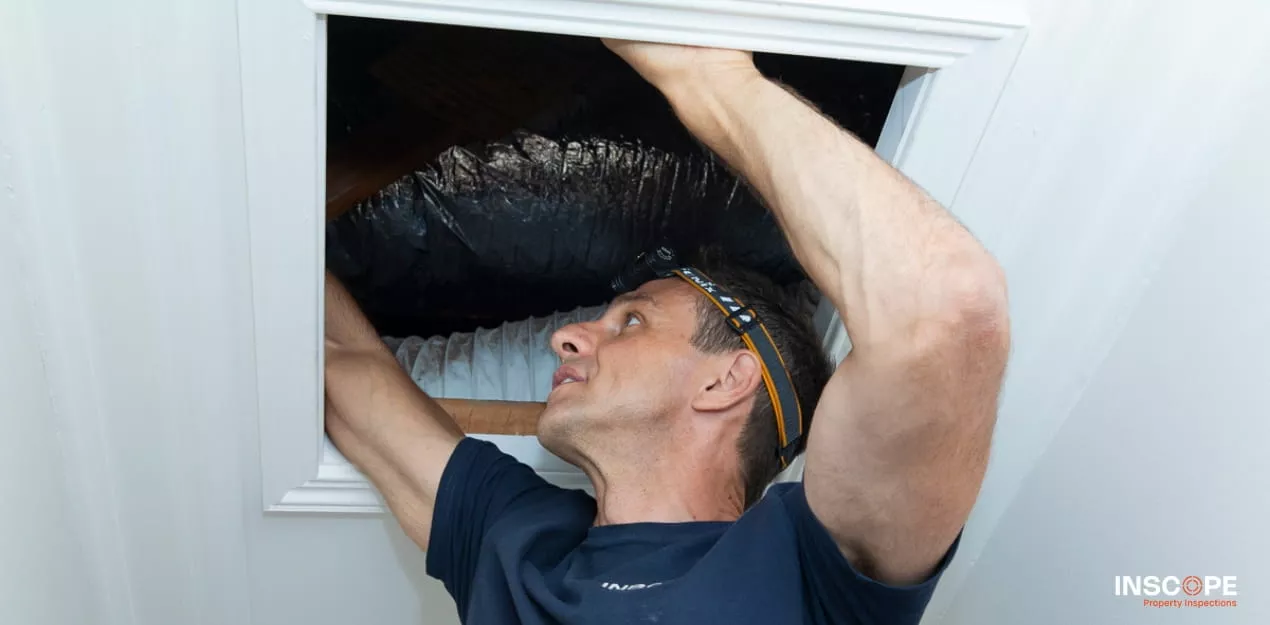
- Roof space: Roof cavity framing, insulation, ventilation, and signs of water ingress.
- Internal rooms: Walls, ceilings, floors, wet areas, doors, and windows.
- Subfloor: Stumps, footings, crawl spaces, dampness, and timber condition where accessible.
- Outbuildings: Garages, sheds, and extensions within the agreed scope.
During a building inspection, inspectors evaluate various areas, including interior rooms, roof spaces, exterior walls, windows, and subfloor areas, checking for defects and compliance with building codes. Tools like thermal imaging cameras and moisture meters help identify hidden issues that a visual check alone might miss.
A comprehensive building inspection report is prepared in accordance with Australian Standard AS 4349.1-2007, ensuring accuracy, clarity, and transparency in the findings. It’s worth noting that building inspections do not cover pools, electrical appliances, or gas appliances.
Now you know what the inspector is doing on site, but do you need to be there while they do it?
Should you be home during the building inspection?
You don’t have to attend, but it’s strongly recommended. Being there lets you see defects firsthand, ask questions in real time, and get a verbal explanation of anything that concerns you. That context is hard to get from a report alone.
We always recommend buyers join us for the final 15 minutes of the inspection for a verbal walkthrough. Many inspectors provide a brief verbal summary after the on-site work is completed to highlight major issues. This is especially useful when auction or finance deadlines are tight.
If you can’t attend, here’s how to keep things moving:
- Ensure the real estate agent has arranged full access to the property
- Unlock all internal rooms, roof hatches, subfloor access points, and outbuildings
- Secure pets before the inspector arrives
- Share the inspector’s mobile number with the agent for any access issues on the day
Who else might be present matters, too. If the vendor or agent is on site, some buyers feel the inspector moves too quickly. A good, qualified inspector won’t let that affect the thoroughness of their assessment.
How quickly can you get a building inspection in Melbourne?
Melbourne buyers working to a finance clause or cooling-off period deadline need to move fast. Booking lead times vary depending on inspector availability, the suburb, and the property type.
Here’s what to expect:
- Same day: Possible but not guaranteed. Best suited to urgent pre-auction situations where access is already arranged.
- Next day: The most common option for buyers with a short cooling-off period window.
- Standard 2 to 3 days: Suits private sales where the timeline is more flexible.
A locally based Melbourne building inspector can confirm availability and organise access with the real estate agent faster than an interstate or multi-state company. That local advantage matters when every day counts.
When booking, ask your inspector three things: their experience with that property type, the format of their inspection report, and how quickly they can turn the report around. A building inspection can reveal hidden issues, potentially saving buyers thousands in repairs and providing valuable information during negotiations.
Conducting a thorough building inspection helps safeguard a buyer’s financial interests by identifying potential risks and ensuring a sound investment before purchase. Don’t let a tight deadline push you toward a rushed job.
How long does it take to get the building inspection report?

A detailed written report is usually delivered within 24 hours after the inspection.
At Inscope, we typically send it out the same evening for morning jobs, depending on the property’s complexity.
A comprehensive building inspection report is prepared in accordance with Australian Standard AS 4349.1-2007, ensuring accuracy, clarity, and transparency in the findings. It covers major defects, minor defects, safety hazards, photos, likely causes, and recommended next steps. It’s not a checklist; it’s a document you can use to negotiate repairs or walk away with confidence.
Here’s how to read it effectively:
- Major defects: These need urgent attention. They affect the property’s structural integrity or pose safety hazards.
- Minor defects: Less urgent but worth tracking for future maintenance.
- Photos and descriptions: Use these when you negotiate repairs or request a price reduction before settlement.
Inspection results give buyers negotiation power; if defects are found, they can negotiate a lower purchase price or request repairs before settlement. If you disagree with any findings, a second opinion from another qualified building inspector is always an option.
Choosing the right building inspector in Melbourne upfront makes the whole process faster and less stressful.
Timeframes for different Melbourne property types
These examples help Melbourne buyers relate their situation to approximate inspection times. All times are for a standard building inspection unless noted.
- Inner-city terrace in Carlton or Fitzroy: Often 2 to 3 hours. Subfloors, roof cavities, multiple storeys, and older electrical systems all add time.
- Suburban 4-bedroom brick veneer in Rowville or Craigieburn: Typically 1.5 to 2.5 hours, depending on extensions, outbuildings, and property size.
- 1960s weatherboard in Reservoir or Oakleigh: Allow 2-3+ hours. Older framing, stumps, and past renovations need closer scrutiny to assess structural integrity.
- Modern 2-bedroom apartment in Southbank or Docklands: Often 45 to 90 minutes, with additional time if common facilities and plant areas are included.
- Large architect-designed home in Brighton or Kew with pool and multiple levels: Can extend to 3 to 4+ hours, especially if combined with a pest inspection.
- Pre-settlement or handover inspection on a newly built townhouse: Usually 1.5 to 3 hours, depending on finish quality, safety aspects, electrical hazards, and defects found.
Complex properties, homes with many visible defects, or those requiring detailed assessment of structural concerns, may take longer.
Booking a Melbourne building inspection with inscope
Planning ahead makes the whole process easier. Melbourne buyers who know their critical dates (auction day, finance clause deadline, cooling-off period end) can book with confidence and avoid last-minute stress.
When you contact Inscope, have the property address, type, and key dates ready. Nick will talk you through how long the inspection is likely to take for that specific property and when your detailed report can be delivered. Inscope aims to accommodate urgent pre-auction and short-cooling-off-period bookings where access and scheduling allow.
Reports are typically emailed within 24 hours, and you can book a call with Nick to discuss any concerns or negotiate repairs after reviewing the findings. As registered building practitioners with real-world building experience, Inscope focuses on understanding the causes of defects, not just ticking boxes.
You can also request a sample inspection report to see the level of detail provided, or ask about the cost of a pest inspection when booking a combined building and pest inspection.
